The difference in a forward tipping vs skip loading dumper is mostly about how the skip empties and where the material ends up. A forward tipping dumper tips its skip forward at a low height, so the load drops out on the ground in front of the machine. A skip loading dumper has a lifting mechanism that raises the skip up first, high enough to empty over the side of a builder’s skip or into a trailer. We hire both as self-drive machines, and the right one for you depends entirely on what you are doing with the material once it is in the skip.
A forward tipping dumper is the standard site dumper most people picture. You load the skip, drive to where the material needs to go, and the skip tips forward to drop the load out at the front. Because it tips at a low height, it is built for moving material around and emptying it onto the ground: spreading hardcore, backfilling a trench, dropping soil where it is needed, or shifting muck from one part of a site to another.
It is simple, stable and the most common type for general groundwork. What it is not built for is emptying into anything with high sides. Tip a forward tipping dumper at a skip and the load lands at the foot of it, not in it. That single limitation is what the forward tipping vs skip loading dumper question really comes down to.

A skip loading dumper does the one thing the standard machine cannot. Its skip sits on a lifting linkage, so before it tips, the whole skip rises up. That extra height means it can discharge over the side of a builder’s skip, into a trailer, or into a low tipper, rather than just onto the floor. You will also hear this type called a high tip or high lift dumper, which describes exactly what it does.
This is the type to hire when the job involves filling skips. The 1 tonne Thwaites we hire is a skip loading machine, and at about 1.15 metres wide it still gets through tight access, so you can be working in a back garden and loading a skip on the driveway without carrying the material out by hand. For the narrowest access we also hire tracked skip loading dumpers, which run on rubber tracks and get through gaps a wheeled machine cannot. That single difference, the lift, is what separates a forward tipping vs skip loading dumper in practice.
Side by side, the forward tipping vs skip loading dumper comparison comes down to a few practical points.
A forward tipping dumper tips its skip forward at a low height, so the load drops on the ground in front of the machine. That makes it the one for spreading material, backfilling and moving muck around a site, and it is the type people mean when they just say a standard or front tip dumper. A skip loading dumper, sometimes called a high tip or high lift dumper, raises the skip before it tips, so it empties over the side of a builder’s skip, into a trailer or a low tipper. That is the one you want for loading skips and clearing waste off site. You may also come across swivel skip dumpers, which tip to the side as well as forward, though most jobs come down to the two above.
In short, it is really a question of whether the load is going on the ground or into a skip.
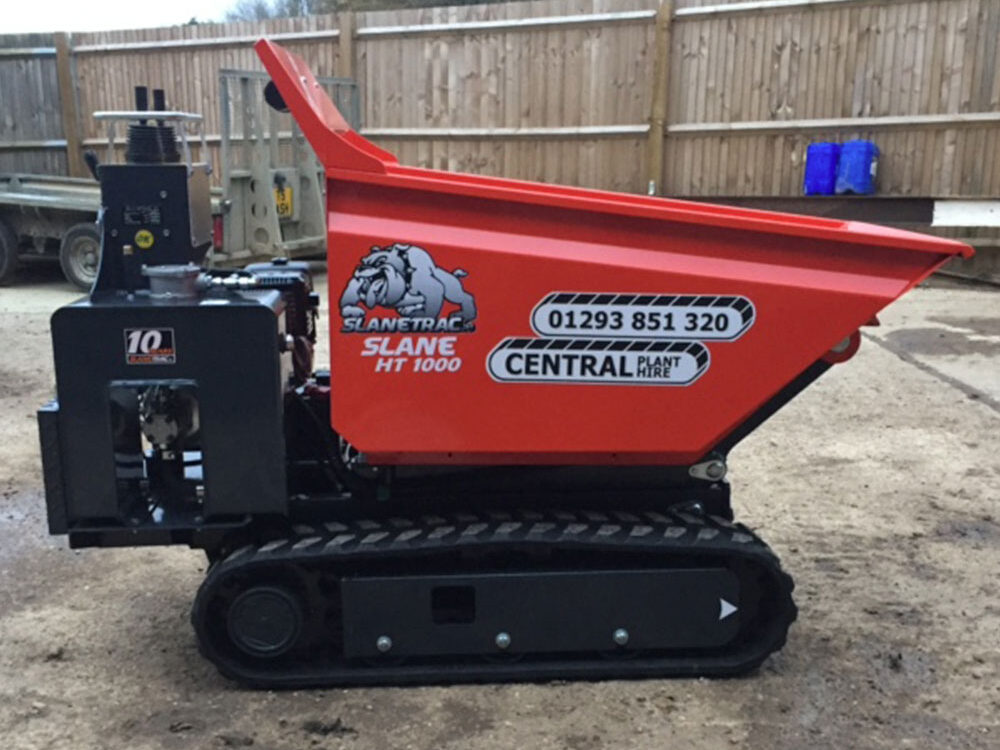
The forward tipping vs skip loading dumper decision starts with where the material is going. If you are loading a skip, a trailer or anything with high sides, you need a skip loading dumper. There is no way round it, as a forward tipping machine will not lift high enough. If you are moving material around and emptying it onto the ground, filling foundations, spreading stone or backfilling a trench, a forward tipping dumper is the simpler and usually cheaper choice, and it does that job well.
A fair number of jobs use both ideas at once. You might dig out a garden, move the spoil with a dumper, and need to load it into a skip at the end. In that case the skip loading dumper covers you for the whole job, which is often why it wins out on smaller sites with limited access. If you are not sure which way to go on forward tipping vs skip loading dumper hire, that is exactly the kind of thing we can talk through on the phone.
Both types are straightforward to use, but a few habits keep you safe. Wear the seatbelt, keep your speed sensible, and only tip on firm, level ground. With a skip loading dumper the raised skip sits higher than the machine, so the load is more top heavy while it is up. Lift and tip only when you are level and stationary, and always travel with the skip lowered. Do not overload either machine, and take extra care near the edge of a trench or excavation, since soft ground can give way under the weight. When we deliver, we run you through how the machine works before we leave, so you are not figuring it out on your own.
Whichever way the forward tipping vs skip loading dumper question goes for your project, hiring from us is simple. There is no account to open and no deposit. You choose the machine, send two forms of ID and pay over the phone. We have supplied dumpers across Sussex and Surrey for over 30 years, and we are members of the Hire Association Europe and a Safehire registered company. Get in touch with our team or request a quote online and we will sort the right dumper for the job.

A forward tipping dumper tips its skip forward at a low height, dropping the load on the ground in front of it. A skip loading dumper, also called a high tip or high lift dumper, raises the skip up first so it can empty over the side of a builder’s skip or into a trailer. The forward tip is for moving and spreading material, the skip loader is for loading skips.
Not easily. A forward tipping dumper empties at a low height, so the material drops in front of the skip rather than into it. To tip directly into a builder’s skip or trailer you need a skip loading dumper, which lifts the skip high enough to clear the sides.
A compact skip loading dumper. The 1 tonne machine we hire is about 1.15 metres wide, so it fits through most gateways and side access while still lifting high enough to load a skip. For the narrowest gaps, a tracked skip loading dumper is slimmer again.
