A lot of our customers at Central Plant Hire are homeowners taking on their first big project, and one of the first things they ask is, can a homeowner operate a mini digger on their own property without needing a licence or certification? The short answer is yes. There is no UK law that requires a homeowner to hold a CPCS card, an NPORS card, or even a driving licence to use a mini digger on private land. That is one of the reasons mini digger hire has become so popular for driveways, extensions, garden landscaping and drainage work. There are still responsibilities that come with it though, and a few things every homeowner should know before climbing into the cab.
When people ask can a homeowner operate a mini digger on their own land, the answer comes down to where the law applies and where it does not. The competency cards used in the construction industry, CPCS and NPORS, are required because of the Provision and Use of Work Equipment Regulations 1998 (PUWER) and the Construction (Design and Management) Regulations 2015 (CDM). These regulations apply to workplaces. Your back garden is not a workplace under construction law in the same sense as a building site is.
What that means in practice is that as a homeowner working on your own property, doing your own work, you are not subject to the same competency evidencing rules that apply to a contractor. You can hire a mini digger from us, take delivery, and use it on your land without needing to prove anything beyond ID and being old enough to take responsibility for the hire.
This applies to most domestic projects you might use a mini digger for. Footings for an extension, digging out for a pond, levelling ground for a patio, removing tree stumps, putting in fence posts, trenching for drainage or services, clearing a driveway, or any number of other jobs around a property.

Can a homeowner operate a mini digger in every situation? Not quite. There are a few scenarios where the answer gets more complicated.
The first is if you have hired a contractor to do the work. Once you bring someone in to do the job for you, that becomes a workplace under CDM, and the contractor will need their operators to be competent. That is their responsibility, not yours.
The second is if your “private property” includes a public-facing element, like the front garden of a house on a busy road, where members of the public could be at risk from your activities. The site is still legally your land, but you take on additional duty of care to anyone outside it. Common sense applies. Do not swing the boom over the pavement when people are walking past.
The third is if you are operating the digger on a public road or footpath, even briefly. That is no longer private property and the rules change immediately. You would need a valid driving licence and a road-legal machine.
A homeowner can legally operate a mini digger on private property, but the machine is still a serious piece of equipment. A 1.5 tonne mini digger weighs 1,500kg. A 3 tonne mini digger considerably more. They have hydraulics powerful enough to lift hundreds of kilos, tracks that can tear up driveways, and arms that can put a window in if you misjudge a swing.
Most accidents involving mini diggers in private use are not caused by mechanical failure. They are caused by people misjudging the machine’s reach, hitting buried cables or pipes, working too close to walls or trees, or letting children get too close. None of these are difficult to avoid if you take a bit of time before you start.
We provide an operator’s manual with every machine and we will run through the basics with you on delivery. Take advantage of that. Ask questions. Get a feel for the controls before you go anywhere near anything you do not want to damage.

Before you start the engine on a hired digger, these are the things worth thinking about:
These are the things that turn a successful weekend project into an expensive accident. None of them are hard, but all of them require thought.
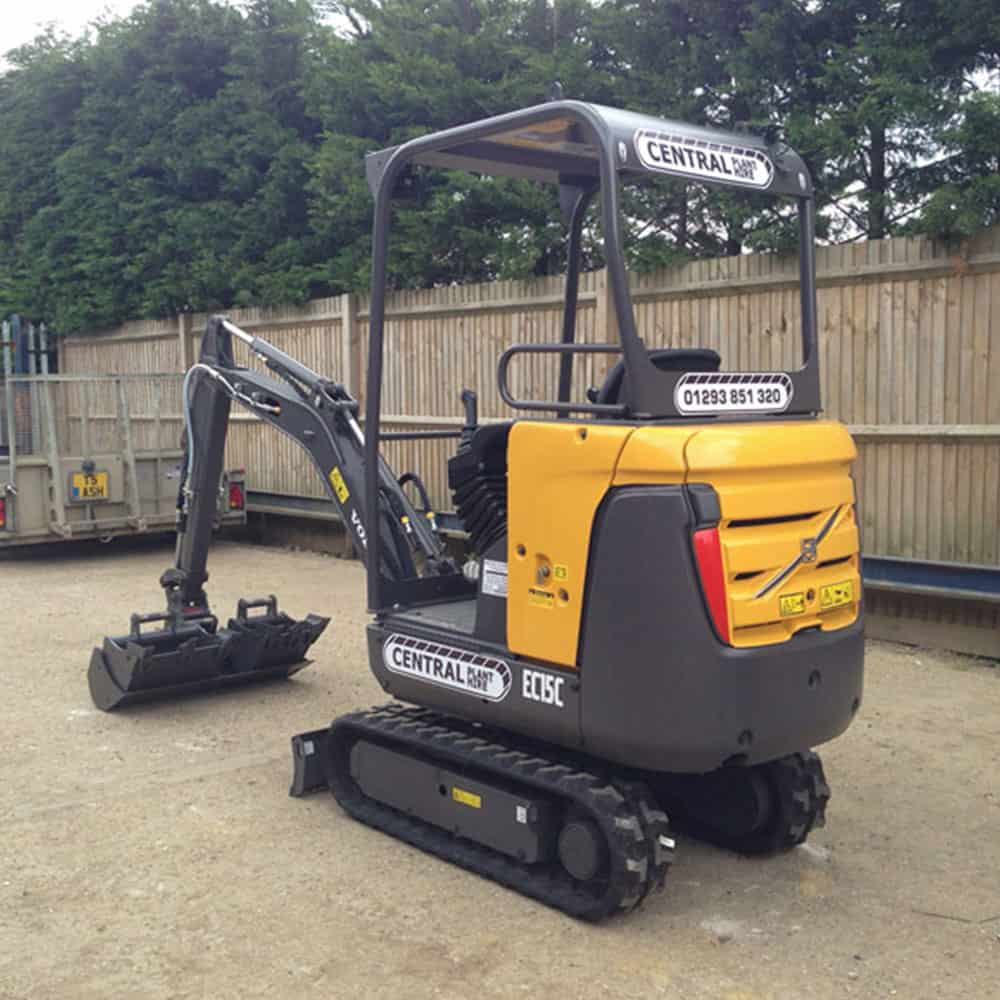
When asking can a homeowner operate a mini digger for a particular job, the next question is usually what size machine to go for. Most domestic work does not need a particularly large digger. The most popular size for homeowners is the 1.5 tonne, which at 1m wide will fit through most side gates and access points, while still being capable of digging foundations or removing significant amounts of material. For tighter access, our 3/4 tonne micro digger can squeeze through gaps as narrow as a standard doorway. For bigger jobs, the 3 tonne machine digs deeper and gets the work done quicker.
Choosing the right size matters. Too small and you will be working longer than you need to. Too big and you might struggle to get it onto the site or cause unnecessary damage to lawns and driveways. We are happy to talk through sizing on the phone before you book if you are not sure.
This is the bit that often gets overlooked. Even though a homeowner can operate a mini digger on private property without certification, if anything goes wrong while the digger is in your care, the financial responsibility is yours.
Standard home buildings and contents insurance does not cover hired-in plant. You can either arrange your own hired-in plant policy through an insurance broker, or take our Loss and Damage Waiver at the point of booking. The Waiver is the simpler option for most homeowners on a short hire, and we will go through the details with you when you book. For a fuller breakdown of how insurance and hired plant works, see our insurance guide.
It is also worth thinking about public liability if your project involves work near a boundary, a road, or anywhere people who are not part of your project could be affected.
If you would feel more confident with some training before operating a mini digger, you can book a short course with one of the many independent providers around the UK. These are not legally required for a homeowner working on private property, but they are useful, particularly if you are planning a larger project or have never used a tracked machine before.
A typical one-day or two-day course will cover pre-start checks, control familiarisation, safe operating procedures, and basic excavation techniques. They are not cheap, but for a major project they can pay for themselves in time saved and damage avoided.
So, can a homeowner operate a mini digger on private property in the UK? Yes, without a licence, without a certification card, and without formal training. The hire process itself is straightforward, two forms of ID and payment, and the machine is delivered to your site ready to use. What we always say to first-time customers is that the legal freedom to operate the machine does not remove the responsibility to operate it sensibly. Take the time to get familiar with the controls, plan the work before you start, and ask for advice when you need it.
If you have a project in mind and you are wondering whether mini digger hire is the right call, get in touch with our team. We hire to homeowners across Sussex and Surrey and we are always happy to talk a project through before you book.
