Running through a few basic checks before using hired machinery is the simplest way to avoid breakdowns, accidents and delays on site. A five-minute walk-around can pick up loose bolts, low oil, a flat tyre or a faulty light before any of them turn into a real problem. This blog covers the key checks every operator should complete at the start and end of a shift, from the machine itself to the ground it is about to work on, plus a few points on PPE, operator competency and refuelling that are easy to overlook. At Central Plant Hire, we service and inspect every digger and dumper before it leaves our yard in Faygate, Horsham, but once the machine is on your site, those daily pre-start checks are down to you.
Under the Provision and Use of Work Equipment Regulations 1998 (PUWER), the person using work equipment has a legal duty to make sure it is safe for use. That means the hirer, not the hire company, is responsible for daily inspections once the machine is delivered. A well-maintained digger can still develop a hydraulic leak in transit or pick up damage from rough ground on a previous job. Spotting these issues early keeps your team safe, protects the machine and helps you avoid off-hire charges for damage. Five minutes at the start of the day is far cheaper than a day lost to a breakdown.
Self-drive plant hire works on the basis that the person operating the machine knows what they are doing. Before you start, make sure whoever is in the cab has the right training for the size and type of machine, whether that is a CPCS or NPORS card, in-house training records or documented experience. A 1.5-tonne mini digger is a very different machine to a 5-tonne excavator, and sizing up mid-project is not the time to find out. Standard site PPE applies to every job: steel toe boots, hi-vis, hard hat and gloves as a minimum, plus eye and ear protection when using breakers or compactors.
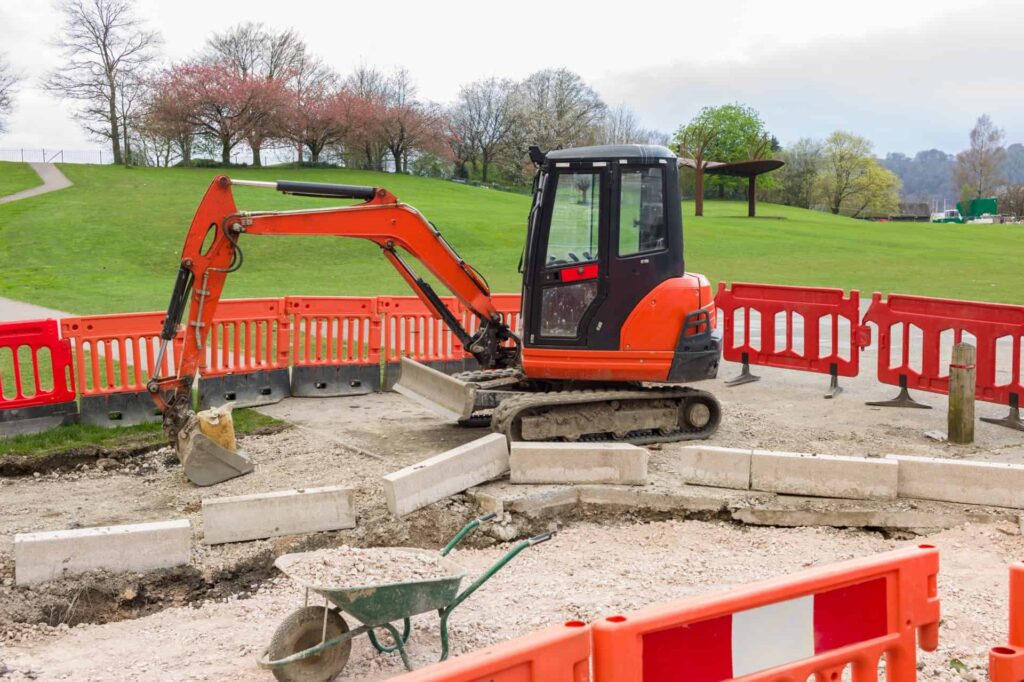
Start with a full walk-around in daylight or good site lighting. Look for cracked hoses, oil or fuel leaks on the ground beneath the machine, damaged tracks or tyres, missing pins and worn or split hydraulic rams. On a mini digger, pay attention to the bucket pins, quick hitch and boom. On a dumper, check the skip pivot points and tipping gear. Make sure mirrors are clean and properly adjusted, guards are in place and the beacon (where fitted) is intact. If anything looks wrong, phone the hire desk before you start work rather than after.
The quick hitch deserves its own paragraph because it is one of the most important safety checks before using hired machinery. The HSE has recorded several fatal incidents where buckets have detached from excavator quick hitches, and most of those involved safety pins that were not properly inserted. Before every job, and every time you change a bucket, visually check that the hitch is fully locked, that the safety pin is in place (if your hitch requires one) and that the bucket is secure. A common test recommended by manufacturers is to place the bucket flat on the ground and try to uncrowd it to make sure it does not disengage. Never work under a raised bucket and never let ground workers stand close to the dipper while attachments are being changed.
Engine oil, hydraulic oil and coolant should all sit between the minimum and maximum marks on the sight glass or dipstick. Top up only with the correct grade, which will be listed in the operator’s handbook supplied with the machine. Check the fuel level and, if you are using red diesel, make sure you are entitled to use it for the task in hand. HMRC rules changed in April 2022 and red diesel is no longer permitted for most commercial construction work. A quick look at the air filter indicator and a check for water in the fuel pre-filter bowl (where fitted) takes seconds and can save a seized engine.

Refuelling is one of the higher-risk moments of any working day. Always refuel on level, stable ground with the engine switched off, and keep ignition sources and smoking well away. Use a bunded fuel tank or a bunded kaddi to prevent spills, and keep a spill kit nearby in case of a small leak. Central Plant Hire can supply 500 litre bunded fuel tanks and 100 litre bunded fuel kaddis alongside your digger or dumper hire, which makes compliant refuelling on site much simpler. Environmental rules around diesel spills are strict, and a spill into a drain or watercourse can land you with a clean-up bill that dwarfs the cost of proper storage.
Before you move the machine, sit in the cab or operator’s position with the seatbelt fastened and run through the controls. Joysticks and pedals should move smoothly and spring back to neutral. Test the service brake, parking brake and steering at low speed in a clear area. Check the horn, working lights, reversing alarm and indicators. Rollover protective structures (ROPS) and falling object protective structures (FOPS) should be undamaged and properly bolted down. These features are there to protect you in the event of a tip-over or falling debris, and a damaged frame should never be used.
Checks before using hired machinery are not just about the machine. The ground needs to be firm enough to take the weight of a loaded dumper or a tracked excavator, especially near trench edges, slopes and made-up ground. Look up for overhead power lines and tree branches, and look down at your service drawings for buried cables, gas mains, water pipes and drains. A CAT and Genny scan is standard practice before any excavation work. Mark out your dig area, plan your spoil heap location and make sure pedestrians and other trades are kept clear with barriers or banksmen where needed.

The end of the shift matters as much as the start. Park the machine on firm, level ground, lower the bucket or attachment fully to the floor, engage the parking brake and isolate the battery where a cut-off switch is fitted. Lock the cab if the site is not secure, and remove the key. Leaving a machine with the bucket in the air or the fuel cap off is an accident or a theft waiting to happen. Note any faults that appeared during the day on your inspection sheet so they can be dealt with before work resumes the following morning.
Writing down your daily checks on a pre-start inspection sheet is good practice and helps demonstrate compliance if anything is ever queried. Most hire companies, including Central Plant Hire, can provide a basic checklist on request. Note the date, machine serial or fleet number, hours on the clock, anything you topped up and anything that needed attention. If a fault develops during the hire, report it to us straight away so we can arrange a swap or a repair rather than risk a bigger failure. The operator’s handbook supplied with every machine is the final reference point for any question about that specific model.
Running through these checks before using hired machinery only takes a few minutes, but it is the single best habit you can build into your working day. Combined with the servicing and pre-hire inspections we carry out at Central Plant Hire, a proper daily check keeps your project moving and your team safe. We supply modern, low-emission Kubota and Volvo diggers and dumpers across West Sussex, East Sussex and Surrey, and selected machines come with auto-idle, ECO modes and CareTrack telematics.
If you need advice on a specific machine, want a pre-start checklist emailed over, or are ready to book your next hire, get in touch with our team today.
